What is SeaTube Fixed Cameras?
Fixed Cameras lets you watch, search, and annotate on videos from observatory cameras both above and below water.
How to Use SeaTube Fixed Cameras and its Features
The Fixed Video Camera Locations home page allows users to navigate to a location using the Navigation Tree panel on the left-hand side by either expanding the arrows under Fixed Camera Locations or searching for a location using the Search bar. The Information panel on the right-hand side provides a description of each camera location as well as coordinates.
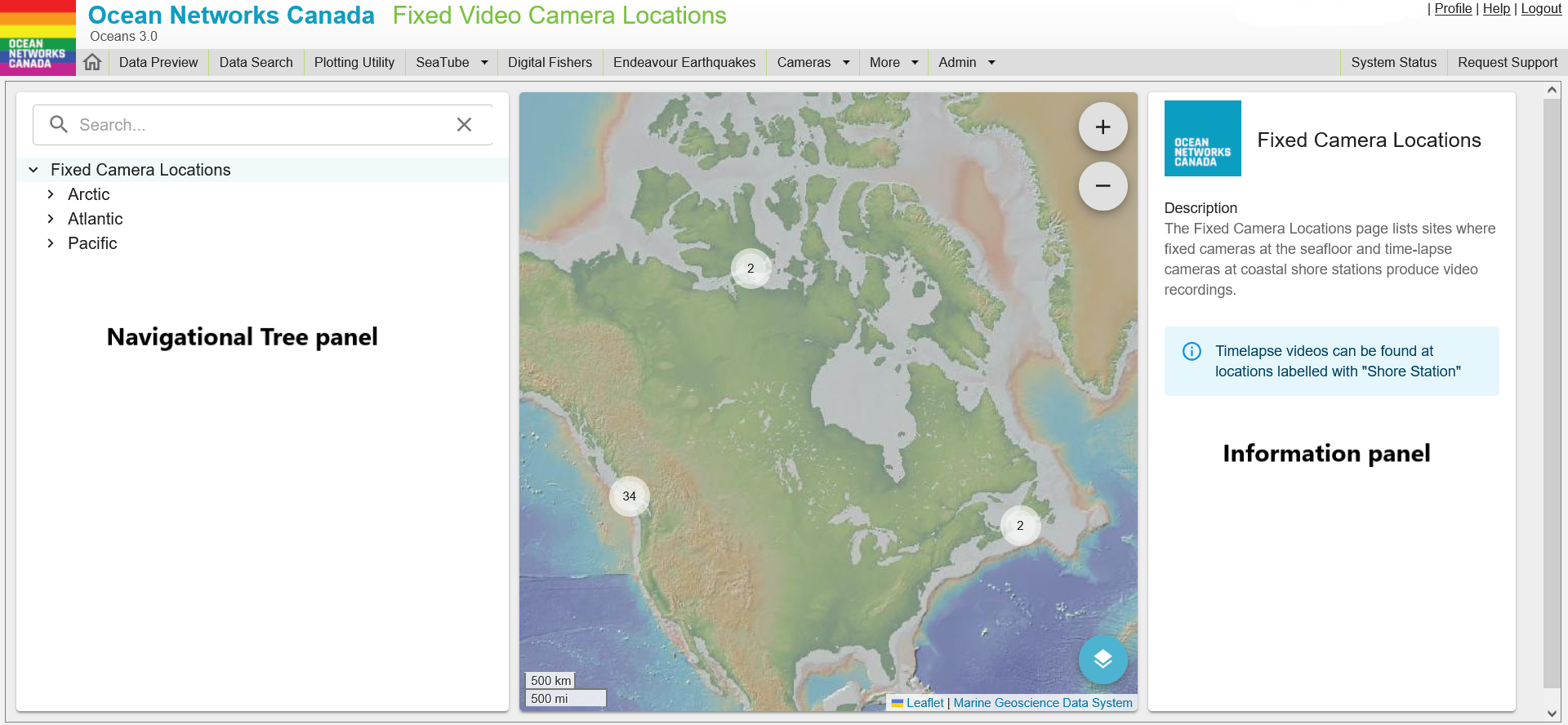
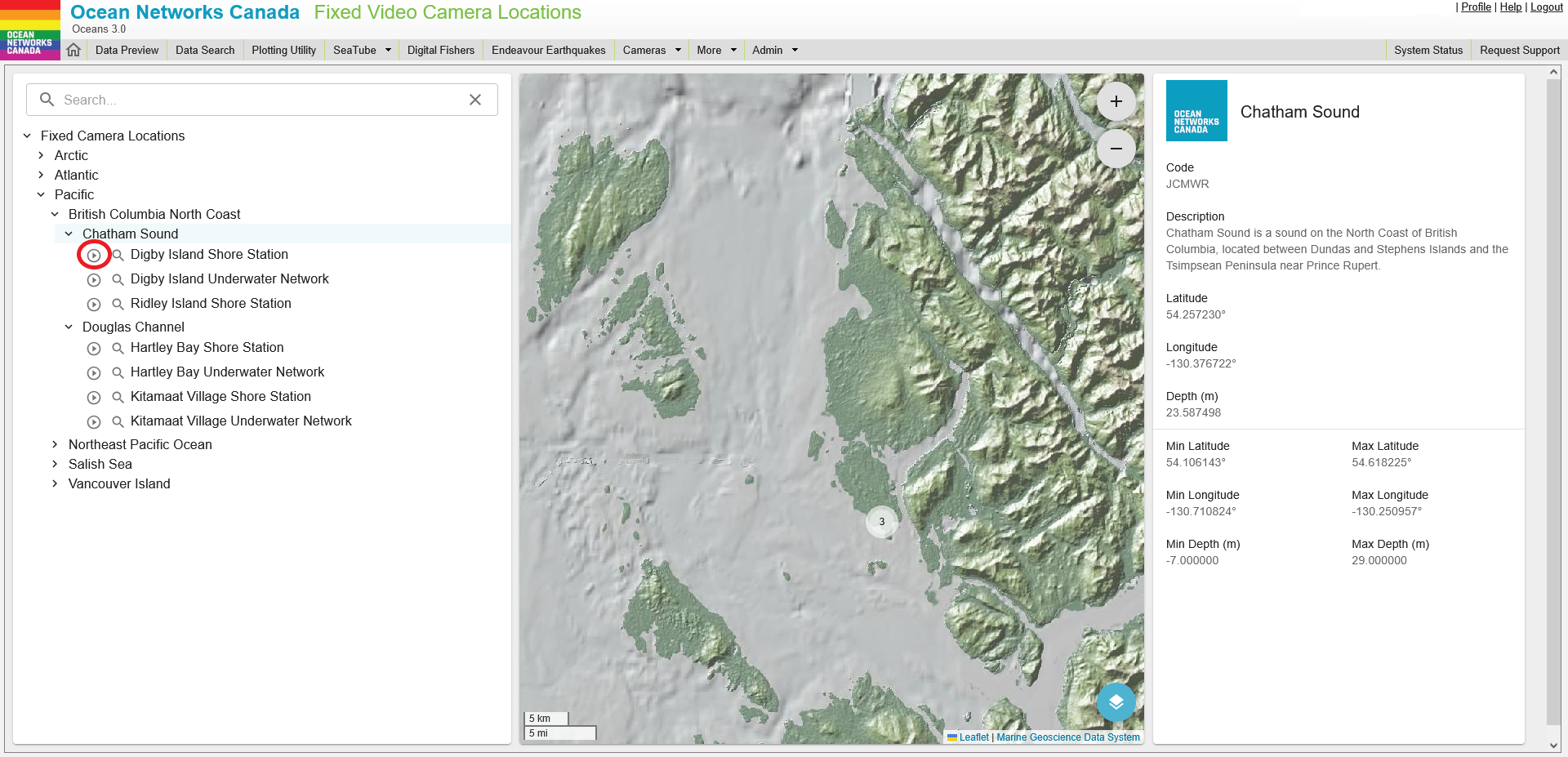
To play a video, add annotations or create a playlist with clips from a video, navigate to the location and click the play button  to open the Fixed Video Camera Playback dashboard.
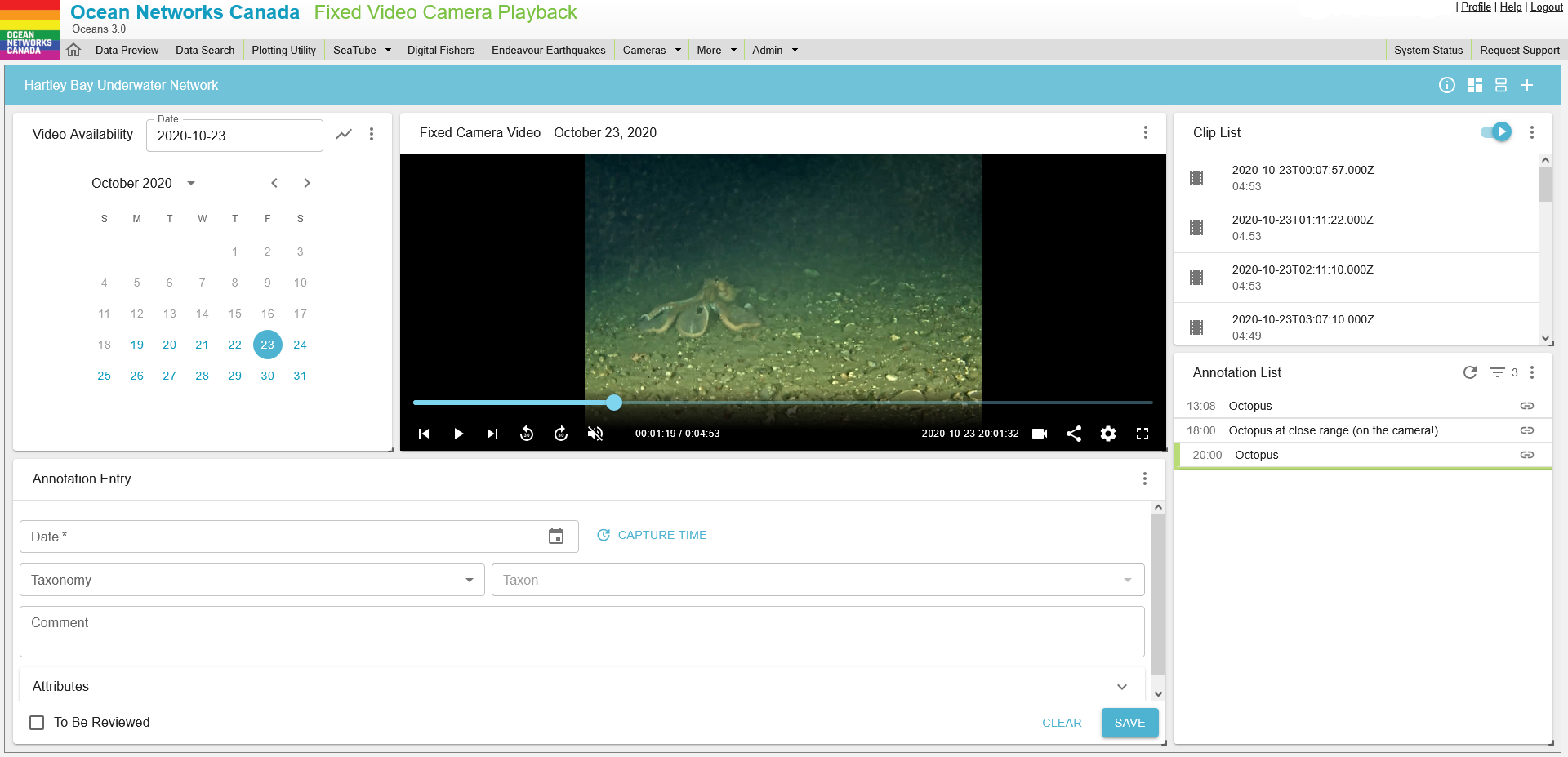
When you select a camera location from the Fixed Video Camera Locations home page you will be taken to the Fixed Video Camera Playback dashboard. The dashboard defaults to the layout shown below with several widgets available.
Video Availability - Displays for which dates video is available at this location
Video - Video display and control widget
Clip List - A list of clips available on the date selected
Annotation Entry - Tools for creating new annotations
Annotation List - List of annotations already created for the current clip
More information on each widget will be provided below.
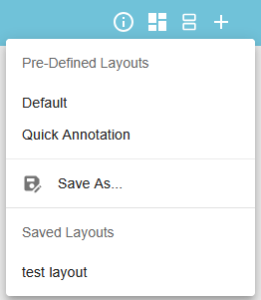
On the right side of the title bar, the layout button  accesses the Layout Settings menu, which shows Pre-Defined Layouts (different configurations of widgets) for the page, and gives users the option to create custom layouts.

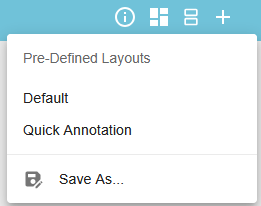
To create a Custom layout, arrange the widgets in any configuration you like and then hit Save As and give your layout a name. Custom layouts will appear in the Layout Settings menu under Saved Layouts and can be accessed at any time.
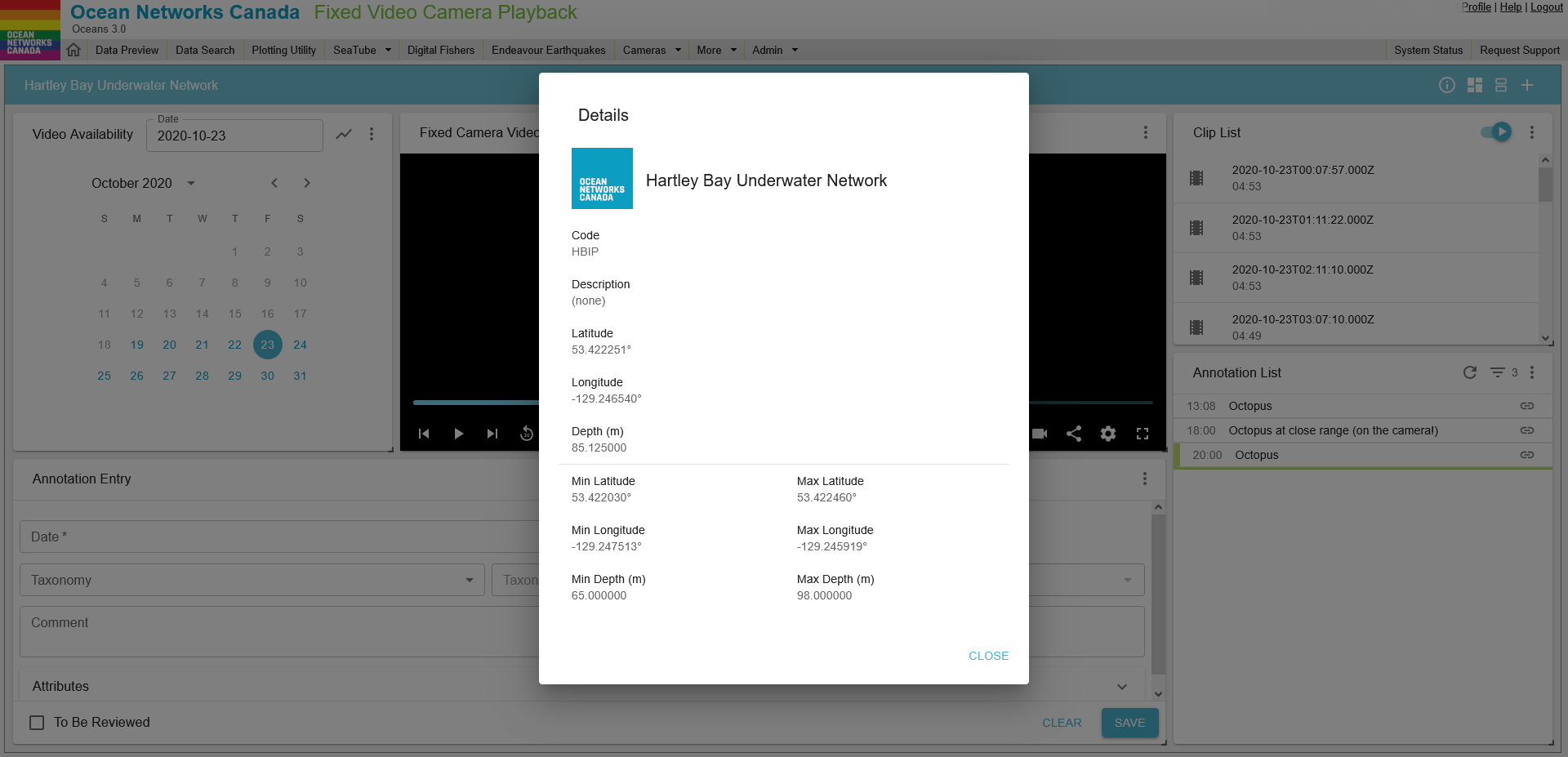
For more information about the location you have selected you can click on the information button  in the title bar.

Users can open a new window in the title bar using the new window button  this allows users to utilize widgets on multiple windows, which could be helpful if screen size is limited. The new windows are synced, for example, an annotation created in a separate window will appear in the Annotation List in the main window.

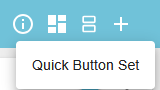
Finally, users can add additional widgets to the dashboard using the add button  . The Quick Button Set widget is not visible in the default layout, but can be easily added. Any widgets that are removed will appear in this list to be re-added if desired.
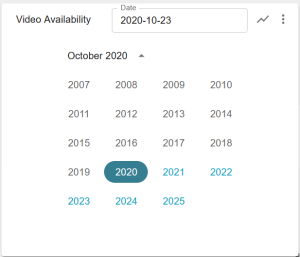
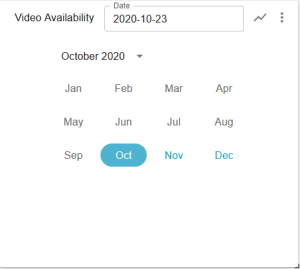
Use this widget to select dates that have available video at this location. You can search for dates in different ways. First you can type a specific date in the Date box at the top of the widget. When you hit enter after entering a date the Video Availability widget will update to show the selected date as will the Clip List and Video widgets. If you want to search for any available video you can click on the date above the calendar, in this example October 2020, and it will show you different years that have video available. Available video is denoted by the date/month/year highlighted in blue, greyed out dates/months/years cannot be selected.
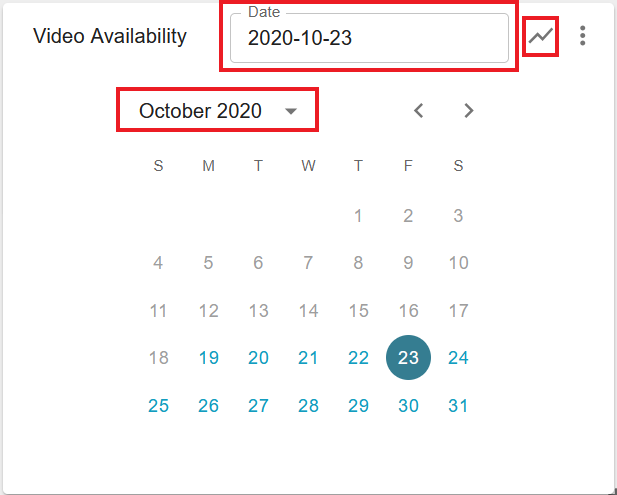
You can also view Video Availability as a graph by clicking on the Show Graph button  .The graph displays available dates as green bars with date on the X axis. The selected date will appear in blue as shown below.

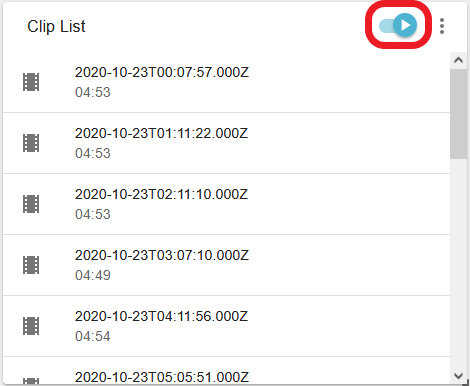
The Clip List widget displays all the available clips for the selected date. Each clip displays the timestamp when that clip begins and the duration of the clip below. The sliding play button highlighted in a red circle in the image below indicates that Auto Play is on. This feature indicates that the next clip will automatically play when the previous clip finishes. You can toggle this feature off by clicking on the button.
The video widget allows you to display and control video. There are several tools available which are explained below.
 - The Previous Video button allows the user to go back to the previous clip if it exists
 - The Next Video button allows the user to go to the next clip if it exists
 - Skip ahead or go back 30 seconds
 - Unmute or Mute the video and control the volume
 - Displays the time of video in relation to the duration of the clip
 - The actual timestamp of the clip
 - Start recording the clip to add to a new or existing playlist
 - Share a link of the clip
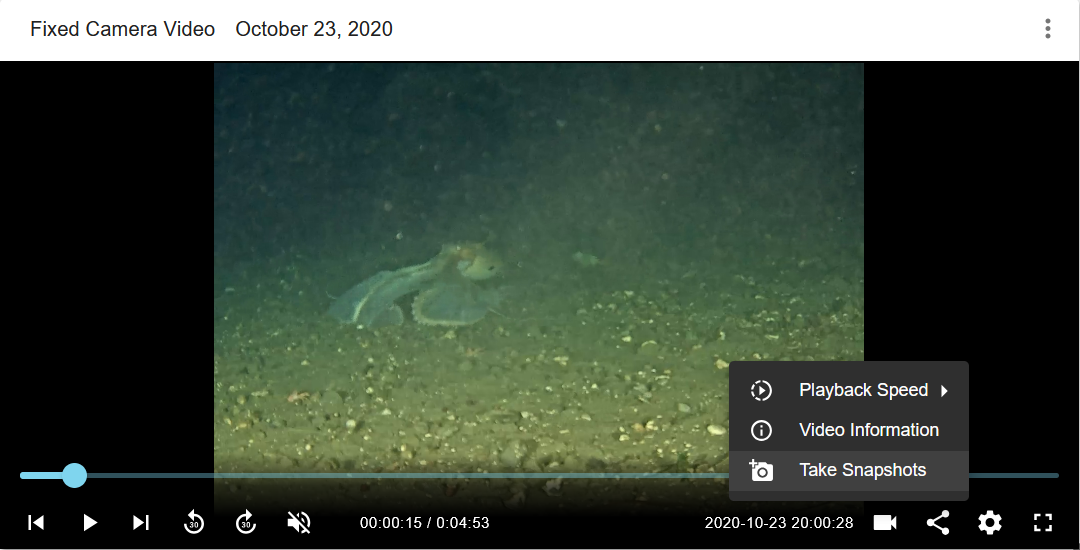
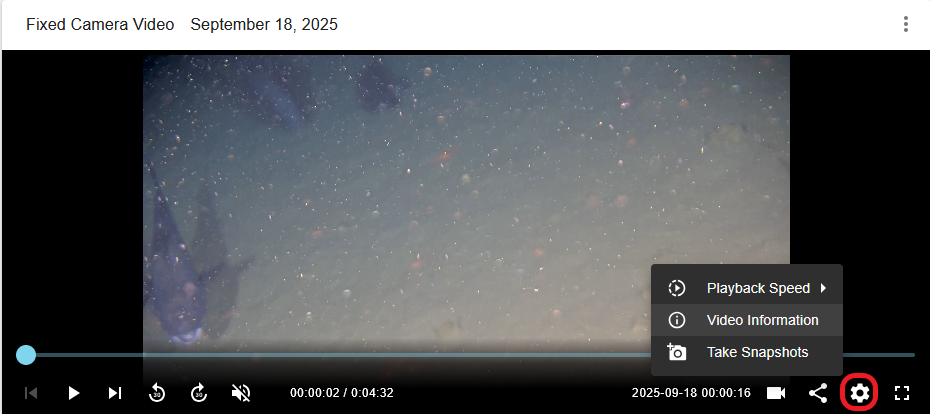
 - More Settings (Playback Speed, Video Information, Take Snapshot)
 - Make the video widget fullscreen
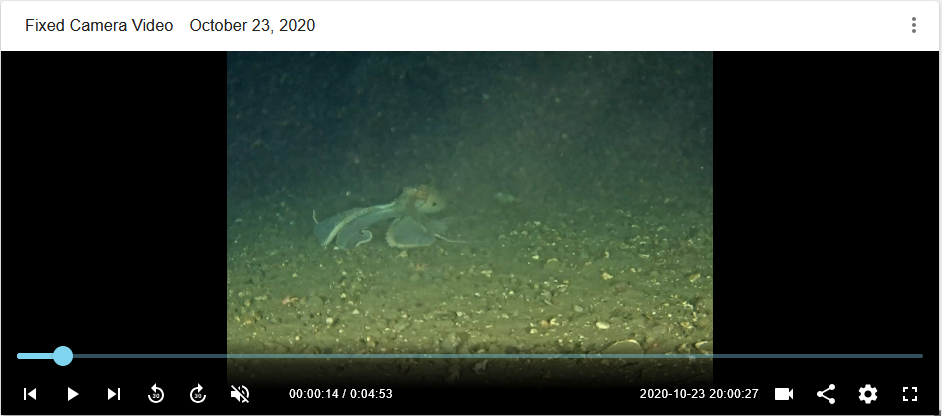
To take a still image from a video clip, go to the More icon and select Take Snapshots.
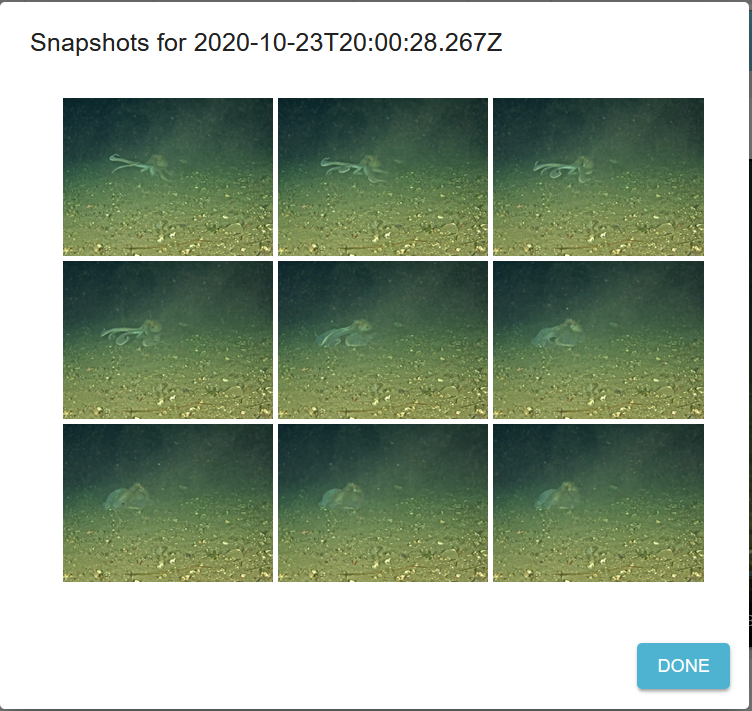
SeaTube will display 9 still images taken 5 seconds before and 5 seconds after the user presses Take Snapshots. To save an image, right click on the image you would like to save and click Save Image As.
To add a clip to a playlist you need to first record the section of video you want to add using the start recording icon in the video widget. When you are recording video the icon will switch from a camera to a red dot (as seen below). To stop recording click on the red Stop Recording icon.
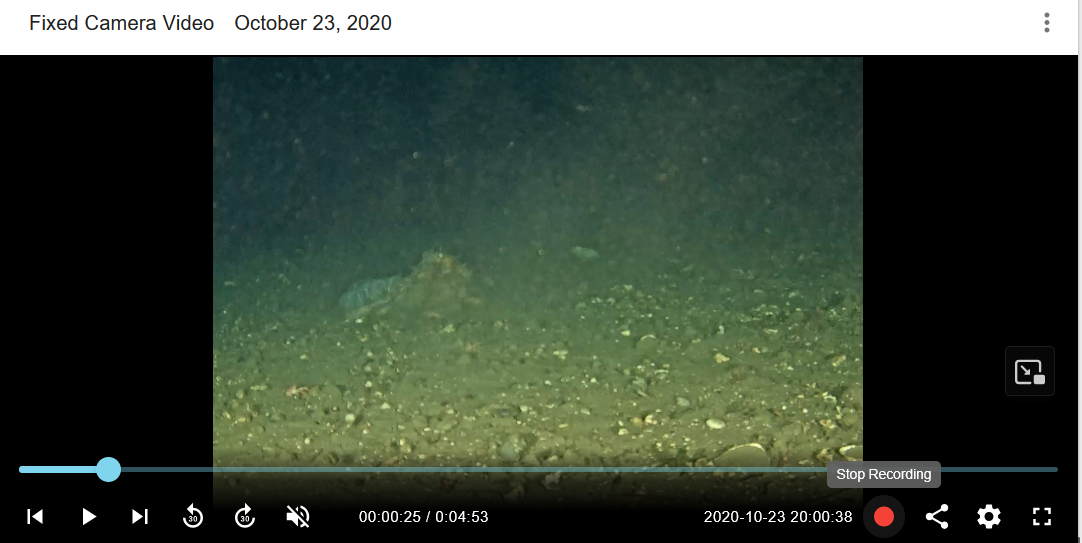
You will then be prompted to add this new clip to an existing playlist or a new playlist.
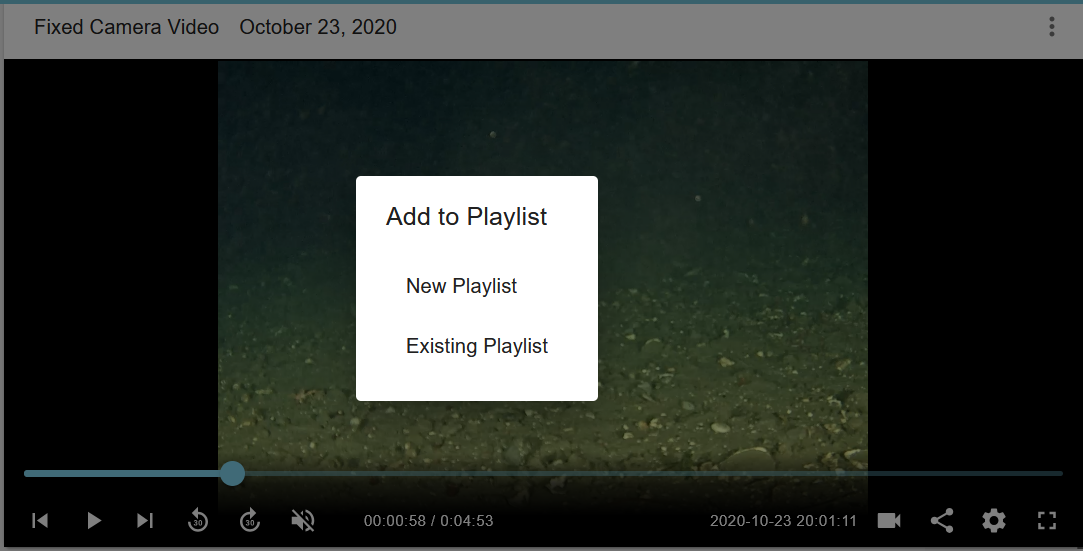
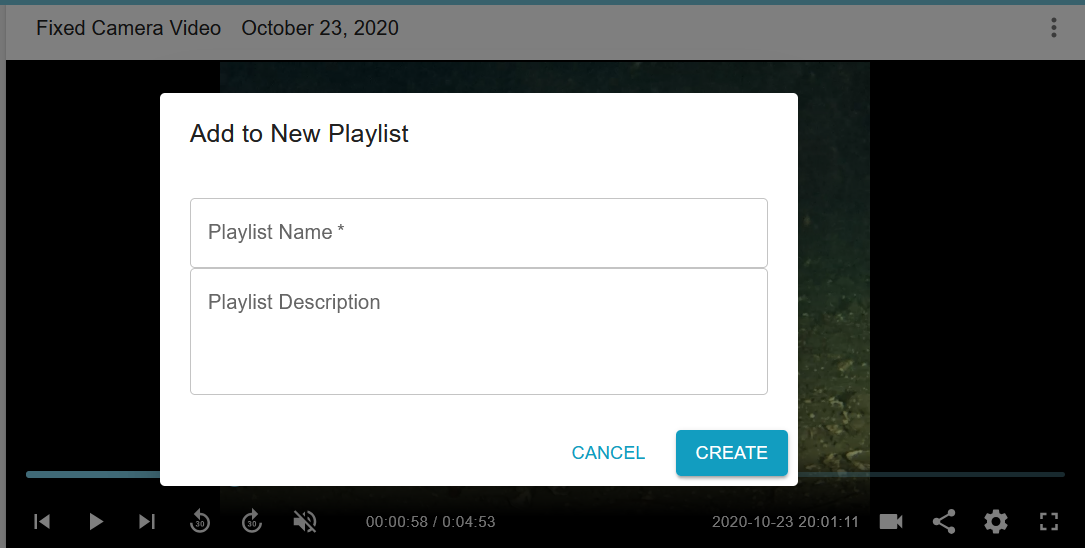
If you add the clip to a new playlist you will be prompted to name your new playlist. The playlist description is optional.
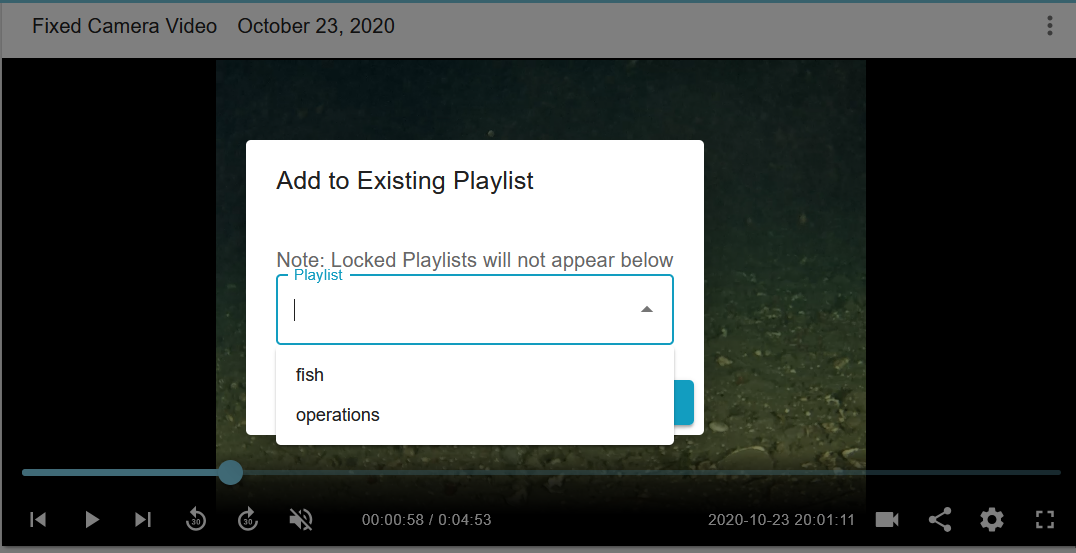
Or if you add the clip to an existing playlist you can select which playlist to add it to. If you have more than one playlist created you will see them in a drop-down menu.
ou can access the Playlists page from the main menu by going to SeaTube > Playlists. Or at https://data.oceannetworks.ca/app/playlists

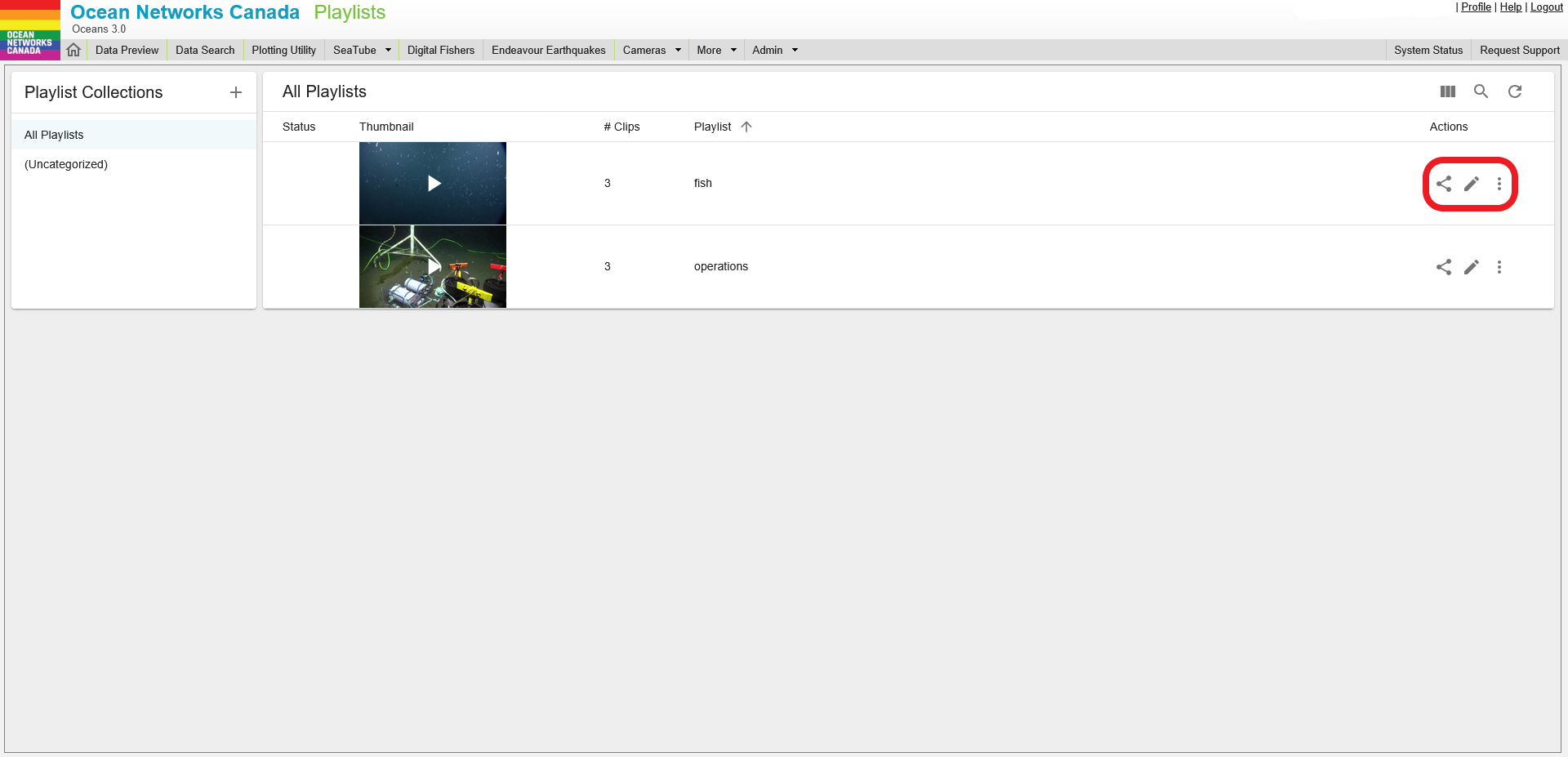
The playlists home page displays your current playlists and gives you options to Share your playlist, Edit your playlist, as well as Clone, Download or Delete your playlist. These options can be found on the right-hand side of each playlist, shown below in the red circle.
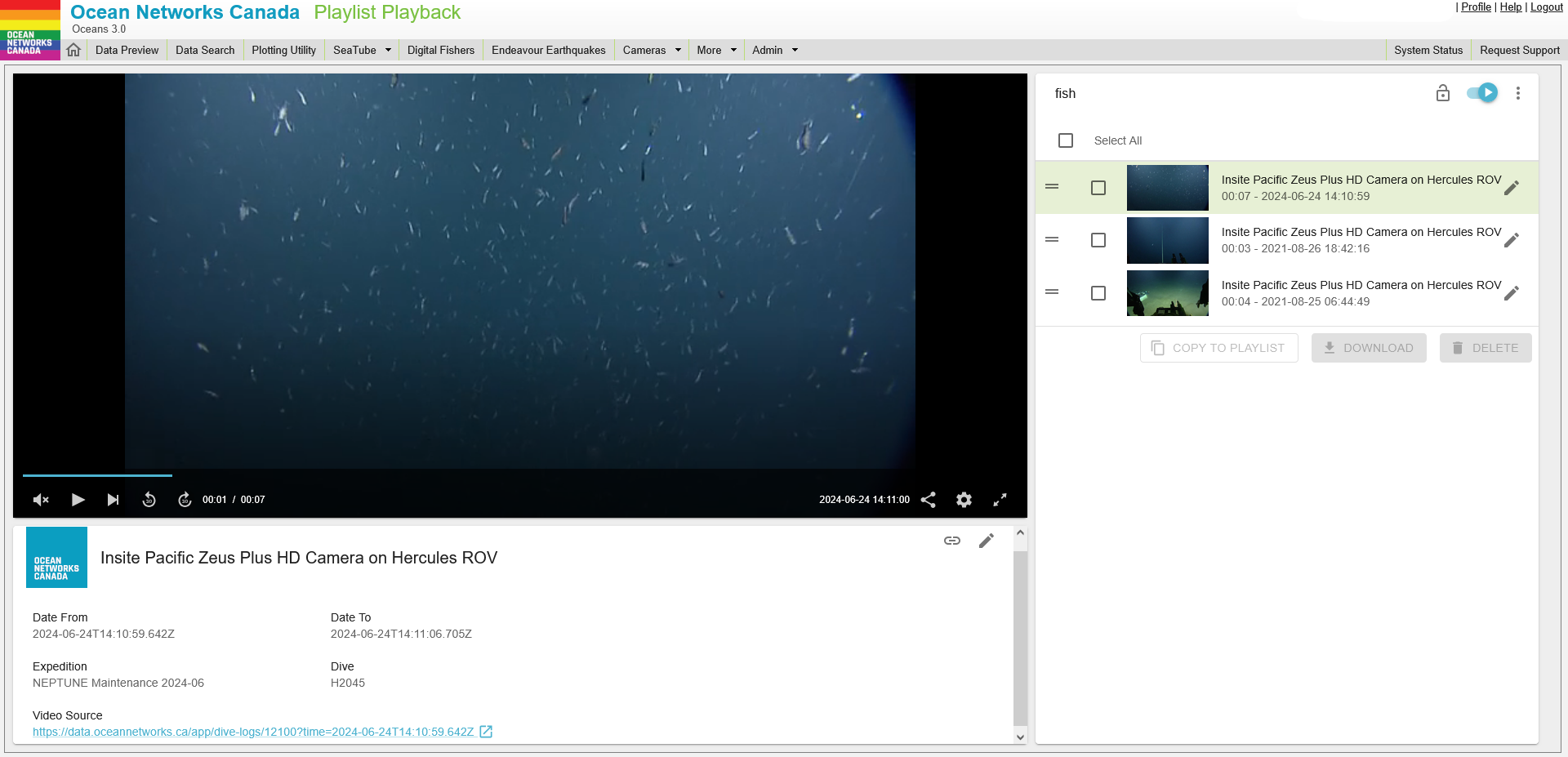
To view a playlist click on the video icon for that playlist, this will open up a new tab. This new pages has 3 widgets displayed. The video widget displays the selected clip and has similar controls to the video widget in the Fixed Camera Playback tool. The panel below displays information related to each clip, including the name of the camera used, the timestamps for the start and end of the clip, if the clip is from an expedition it will also be displayed here with the dive number, and finally a link to that dive.
The panel on the right-hand side displays all of the clips included in this playlist. Here you can edit individual clips, delete clips, download clips and even add clips to a new playlist. By default the clips will auto-play one after another, this can be toggled off by clicking on the blue play bottom in the top right-hand corner.
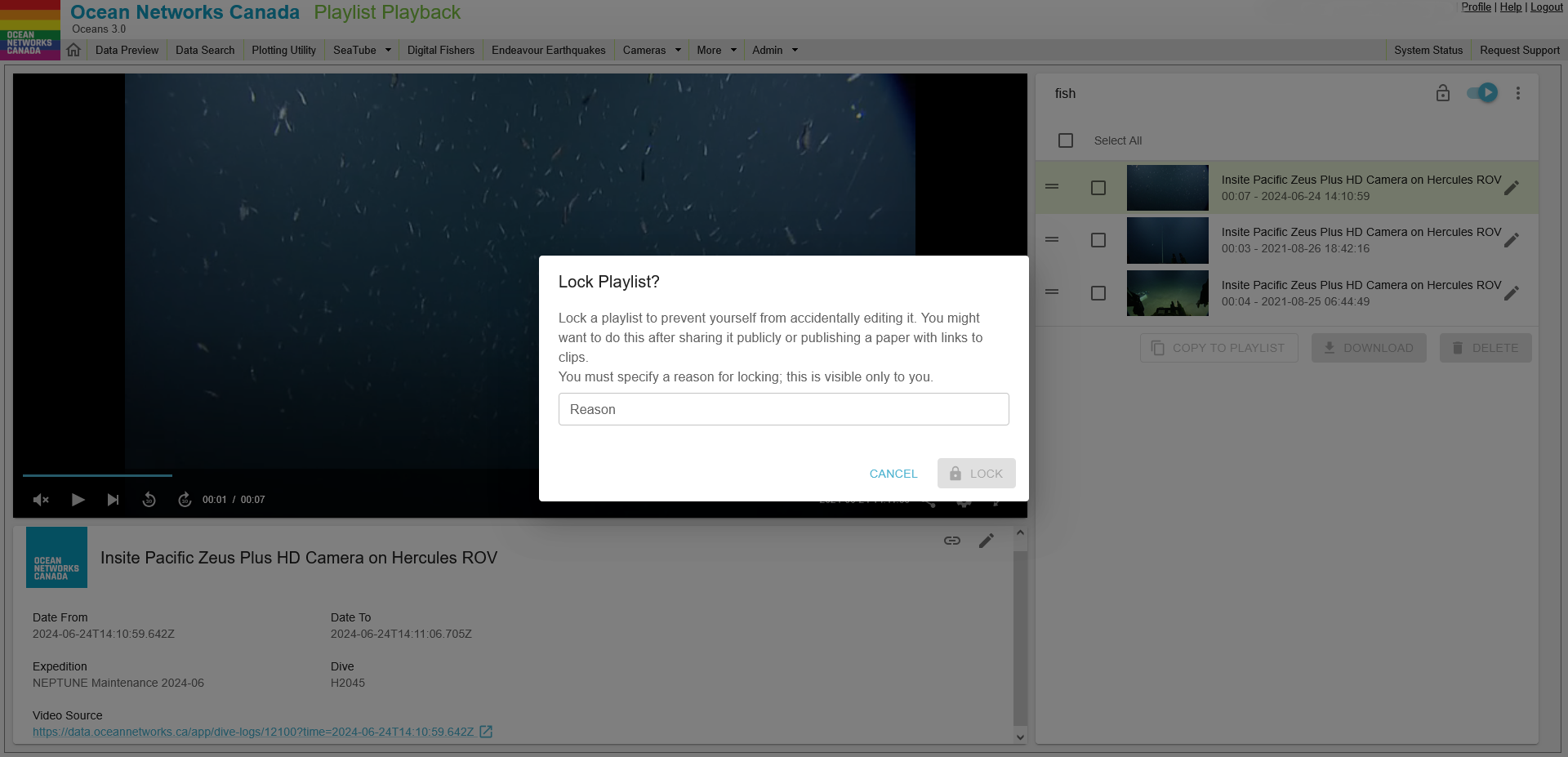
There's an additional option to Lock a playlist so that no further edits can be made. To do this click on the Lock button  . You will be prompted to give a reason for why you want to lock your playlist, this reason will only be visible to you. You may unlock a playlist after locking it, by clicking on the same button and selecting unlock.
1. Click on the Settings icon at the lower right of the video panel and select Video Information.
2. In the pop-up panel, note the device ID for the camera, as well as the timestamp for the video file.
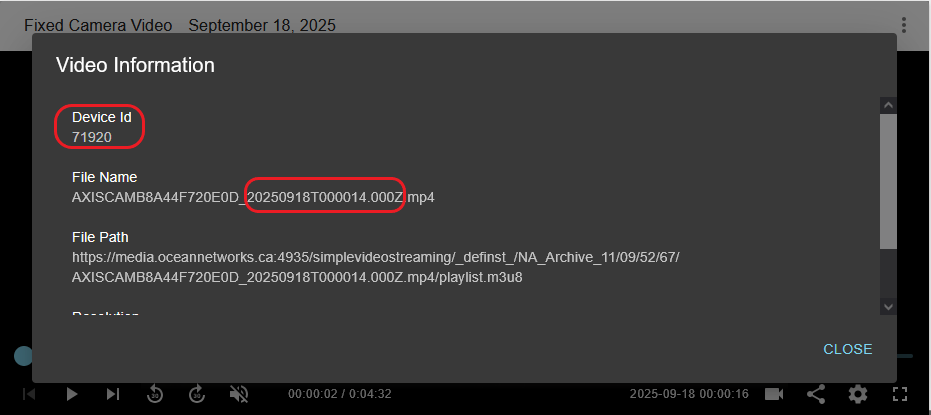
3. Open a Device Search page in Oceans 3.0 (More > Infrastructure > Device Search) or go to https://data.oceannetworks.ca/DeviceSearch and paste the camera device ID into the Device ID field, then click 'RUN SEARCH'
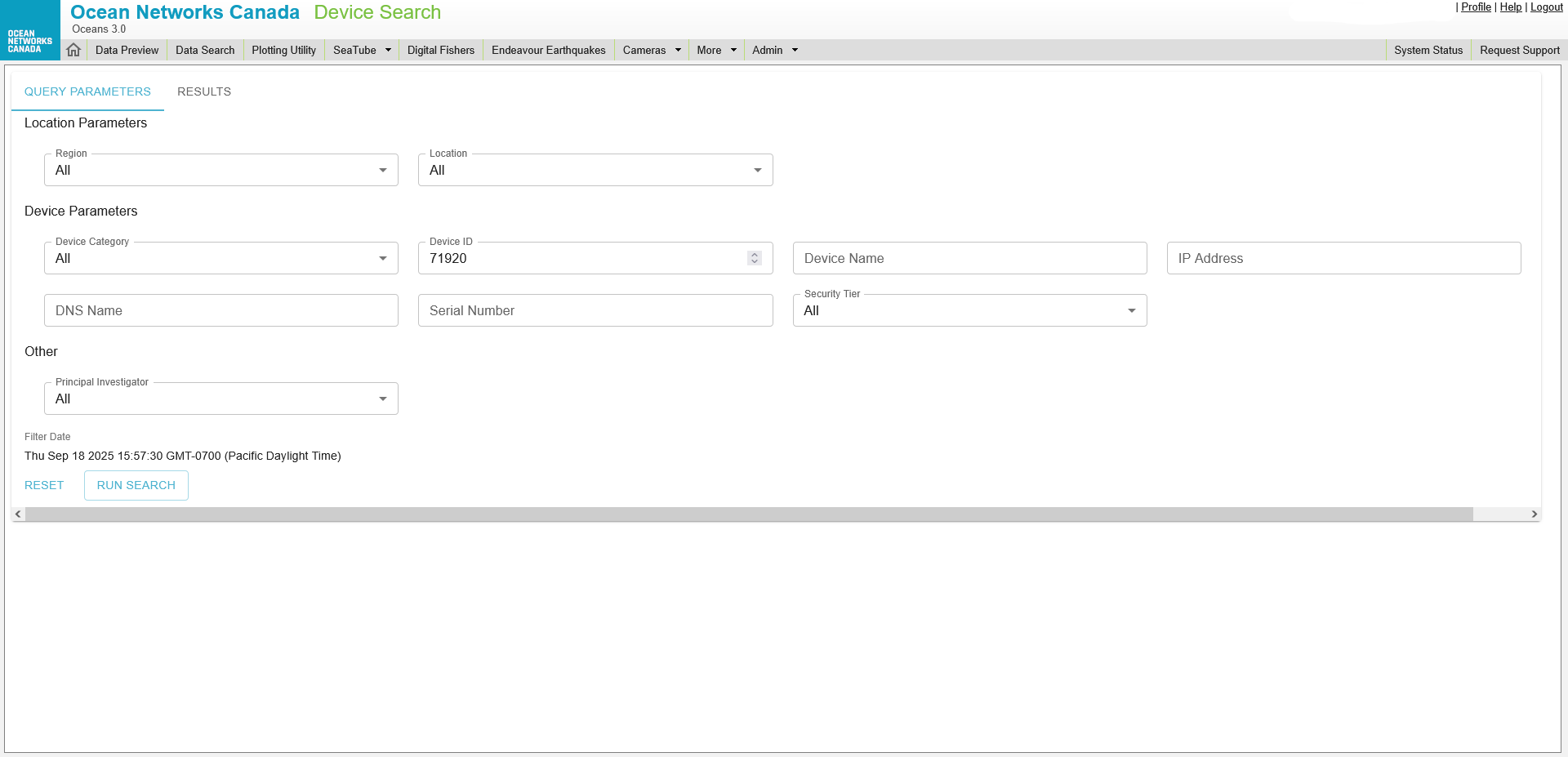
4. In the RESULTS tab, click on the link to the Device Listings page for the camera
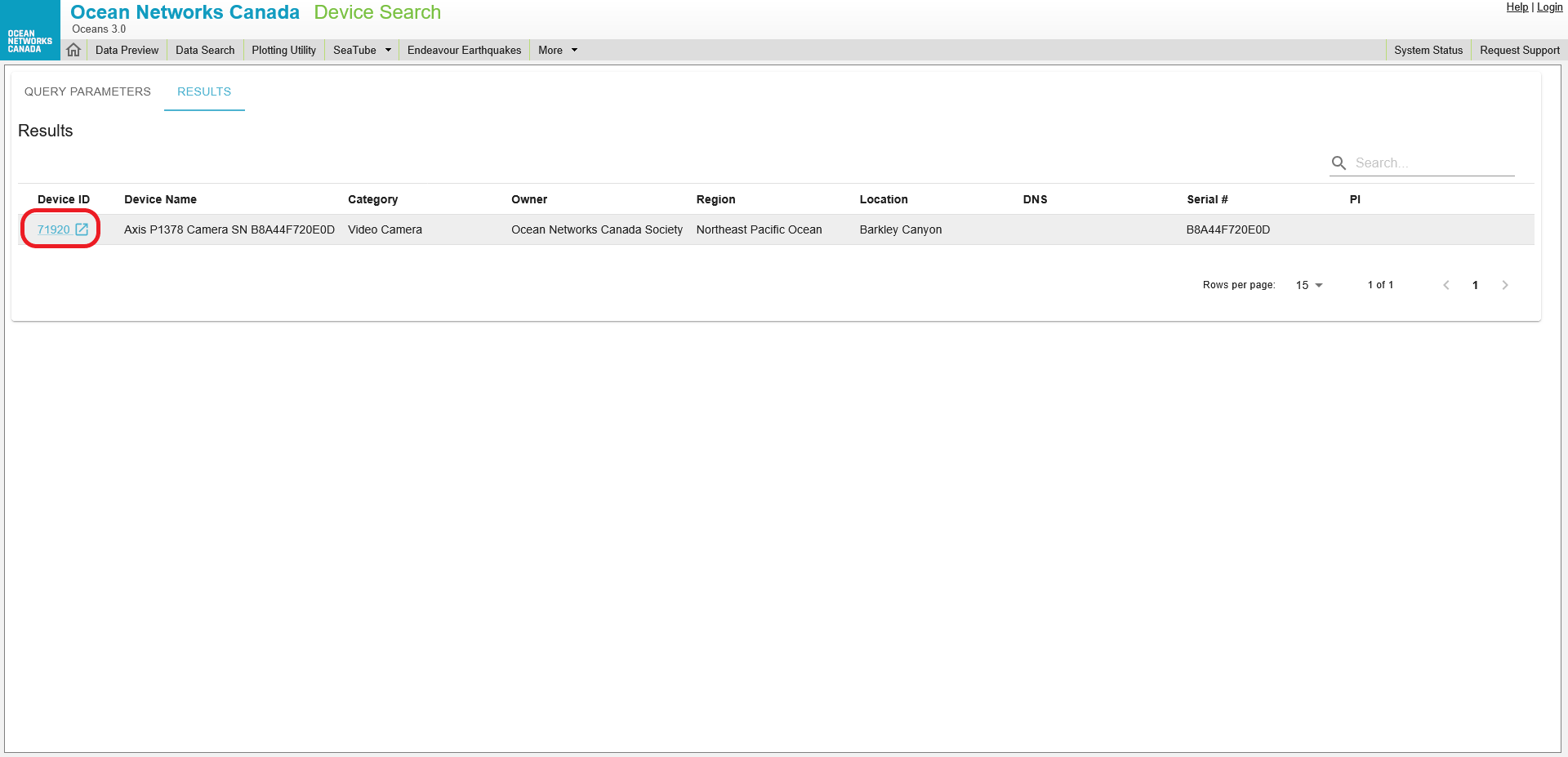
5. Select the Site tab in the Device Listings page, and click on the link to the Site Device ID for the relevant deployment of the camera
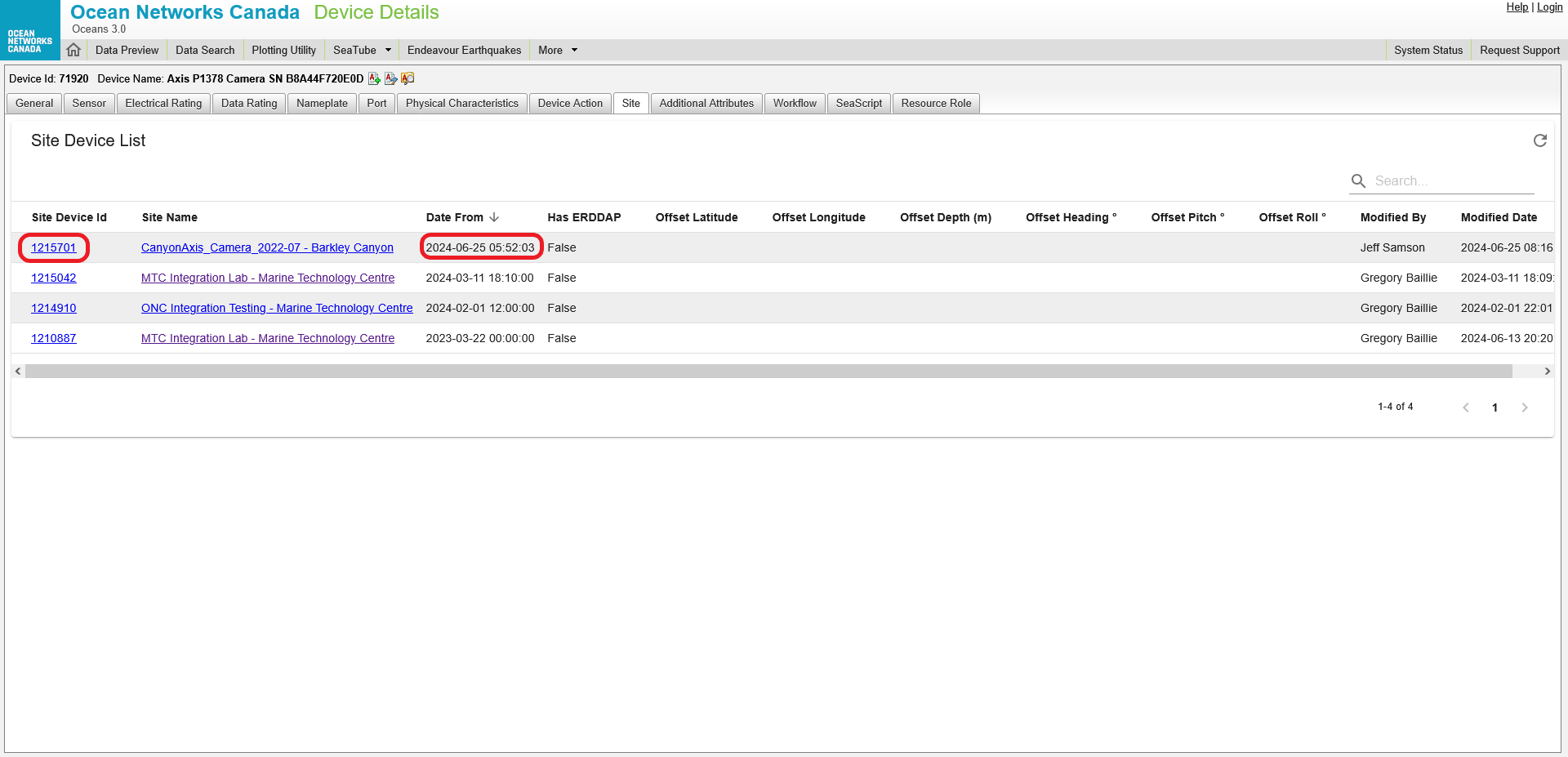
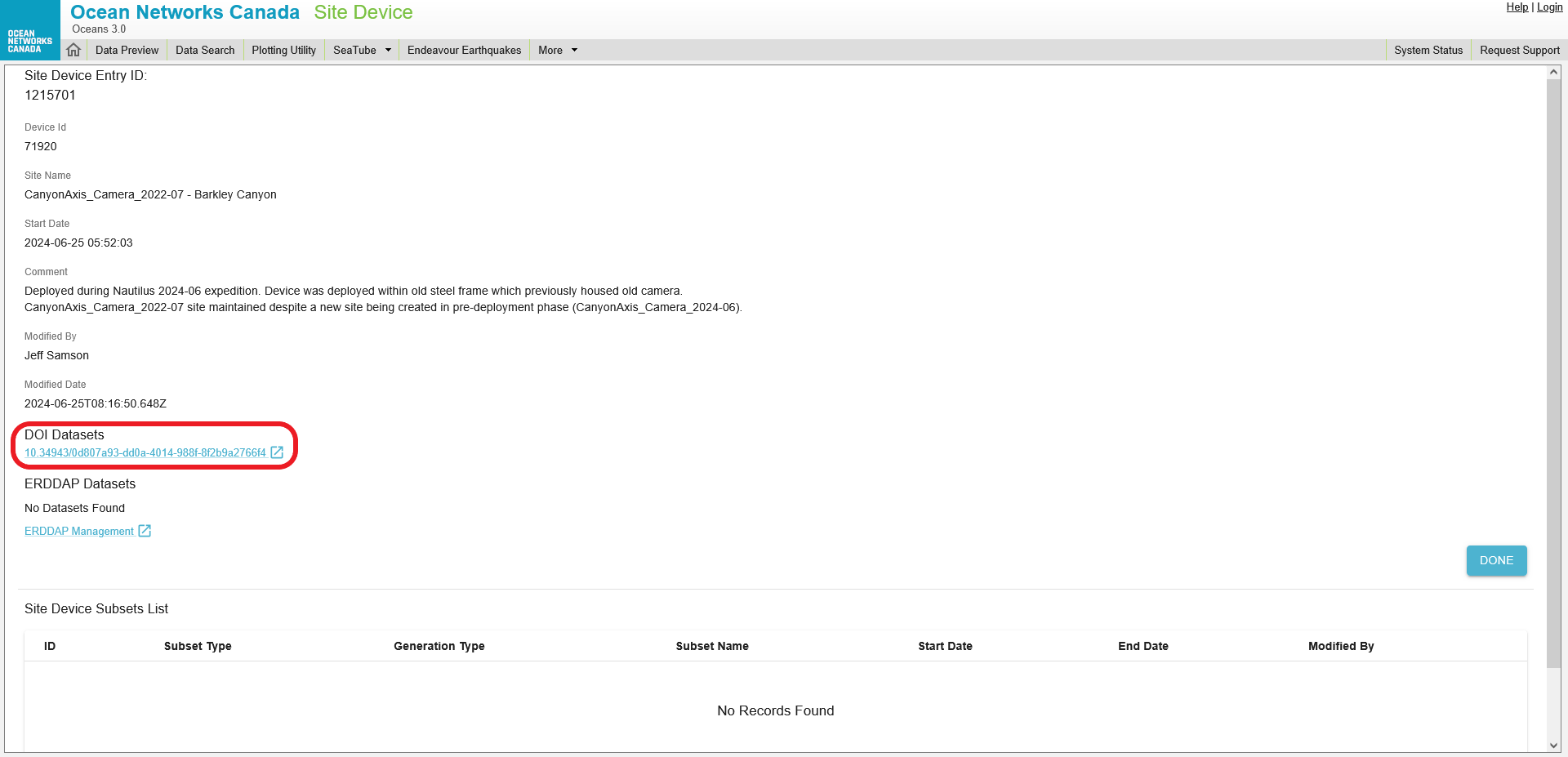
6. In the Site Device page, click on the link to the Dataset Landing Page (under DOI Datasets)
7. Use the DOI in publications, using the format shown under 'DOI Citation'.
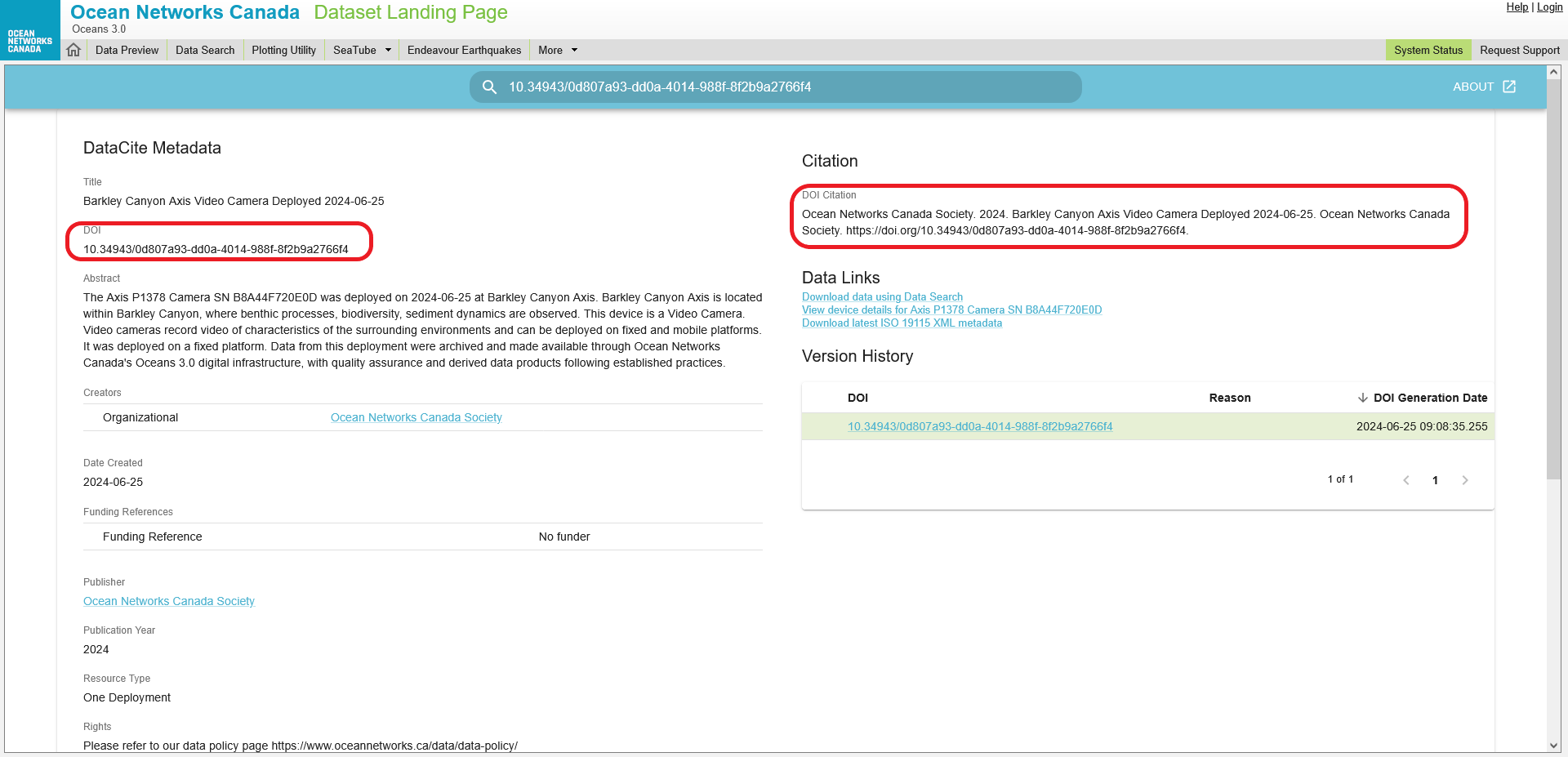
See also How to cite ONC data https://www.oceannetworks.ca/data/how-to-cite-onc/